
Students share how social media shapes their routines, communication, and access to information in an increasingly connected world
Phuentsholing – The rise of social media has transformed how young people access information, communicate, and shape their daily routines. For many college students, digital platforms have become an inseparable part of everyday life—used for entertainment, communication, and sometimes learning.
Conversations with students at the College of Science and Technology (CST) earlier this month revealed how deeply social media has woven itself into their lives, reflecting a generation that is constantly connected through technology and information.
Social media as part of daily life
From morning alarms to late-night scrolling, students say social media has become a constant companion.
Rinchen Dema, a fourth-year engineering geology student, said she spends around four to five hours online every day, mostly browsing entertainment content.
Others report spending even longer hours in digital spaces. Palden Tshering, also a fourth-year engineering geology student, estimates his daily social media use at around 12 to 14 hours.
“I use social media for chatting, making calls, watching reels, and participating in college group chats,” he said, adding that such groups sometimes share information related to surveys, assignments, or academic discussions.
For some students, however, social media use is more measured. Sonam Yuden, a fourth-year electrical engineering student, said she spends about two to three hours online in the evening, mainly to stay connected with friends and classmates while also following educational pages related to her course.
Experiences in the digital space
Despite the amount of time spent online, most of the students interviewed said they have not personally experienced cyberbullying or harassment.
Tashi Chozom, a fourth-year instrumentation and control engineering student, who spends around five to six hours daily on social media during regular class days, said she has not encountered such challenges so far.
Sherab Tharchen Wangchuk, a fourth-year civil engineering student, shared a similar experience, noting that although he spends six to eight hours online each day, he has never faced trolling or harassment.
Palden Tshering recalled receiving a suspicious extortion email once but said he handled the situation by deleting the message and relying on security measures such as authentication apps to protect his accounts.
While their experiences have largely been positive, students acknowledge that the digital world can present risks if users are not careful.
National trends in social media use
The growing use of digital platforms among young people reflects broader national trends.
According to the Media Perception Survey 2025 conducted by the Journalists’ Association of Bhutan (JAB), access to mobile phones and the internet has expanded significantly among youth, bringing both opportunities and challenges.
The survey found that while digital platforms offer benefits for learning and communication, many parents expressed concerns about excessive screen time and its potential effects on physical and mental wellbeing. Issues such as digital addiction, distraction from academic responsibilities, and exposure to inappropriate content were highlighted as areas requiring attention.
The survey also showed that Facebook and Messenger remain the most widely used social media platforms, with the highest levels of daily engagement among respondents. Messaging applications such as WhatsApp and Telegram also play a major role in digital communication, allowing users to share information, coordinate activities, and stay connected.
Platforms such as YouTube, Instagram, and TikTok continue to attract large audiences as well, particularly among younger users drawn to visual and short-form content.
National data further reflects the scale of social media use in the country. As of January 2025, Bhutan had approximately 470,000 social media users, representing more than 59 percent of the total population. The country also recorded around 795,000 active mobile connections, equivalent to roughly 100 percent of the population.
By December 2024, Bhutan had more than 536,800 Facebook users, accounting for over 60 percent of the population, with men representing slightly more than half of the users.
Media influence on society
Social media’s growing influence is also reflected in how people think, communicate, and behave.
According to the JAB Media Perception Index 2025, 66 percent of respondents said media influences their thinking and attitudes, 62 percent said it affects their language, 54 percent reported changes in behaviour, and 53 percent said it influences how they dress.
Balancing connectivity with responsibility
Despite these shifts, students say social media remains both a tool and a responsibility.
For many of them, digital platforms offer opportunities to stay informed, connect with communities, and access knowledge beyond the classroom. At the same time, they recognise the importance of using technology responsibly.
As Bhutan’s digital landscape continues to expand, the experiences of college students highlight a generation growing up in an increasingly connected world—where information flows instantly and where the challenge lies not only in accessing information but also in using it wisely.
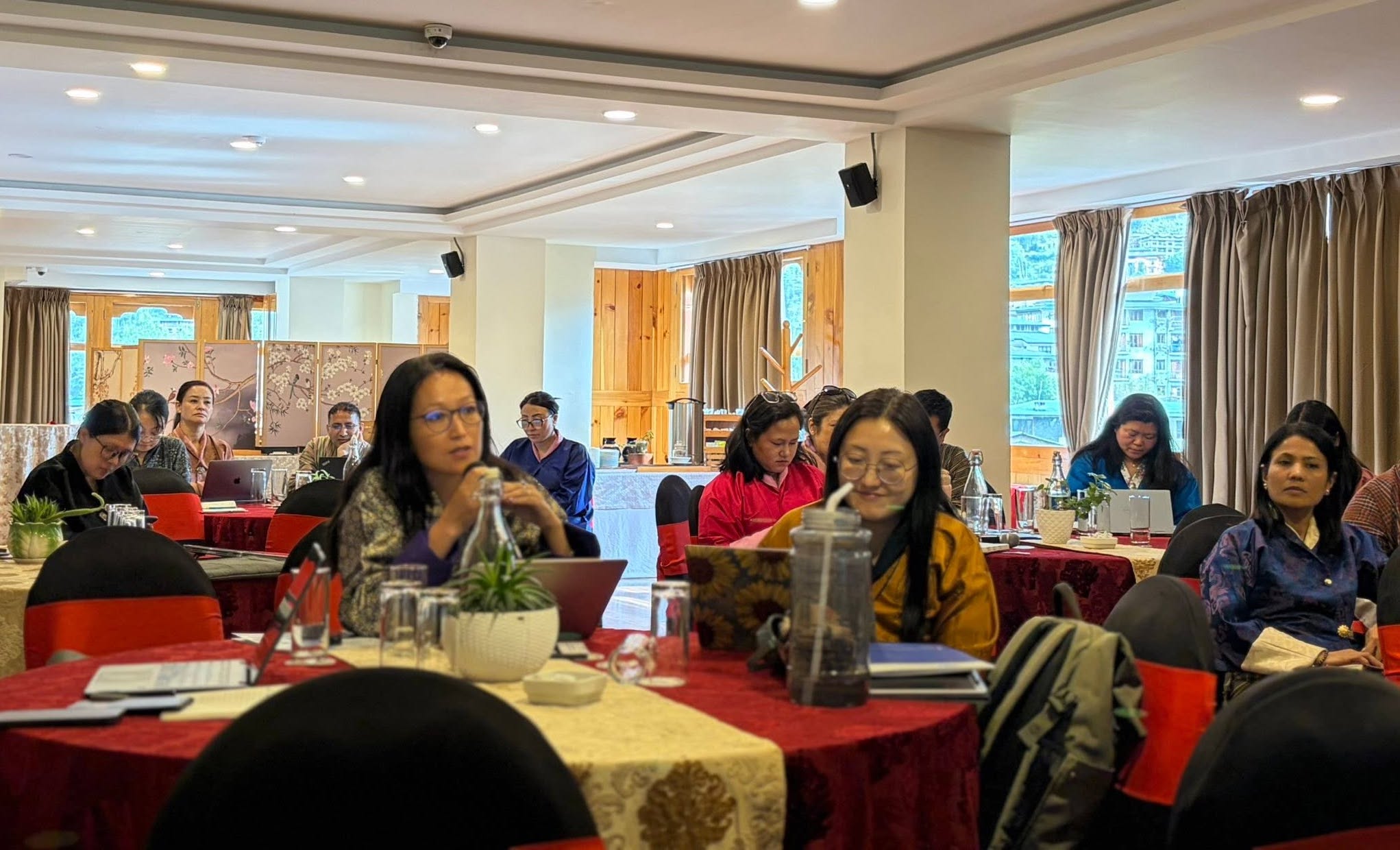
The students were interviewed on their use of social media following a session on awareness of the Right to Information (RTI), facilitated by Needrup Zangpo, former Executive Director of the Bhutan Media Foundation and Chairperson of JAB, at the CST Convention Hall on March 5. The session was part of the Digital Democracy Initiative (DDI) for South Asia project implemented by JAB with support from Accountability Lab.








Leave a Reply