
A constitutional promise, an everyday struggle
THIMPHU – At a recent open forum on access to information and the possibility of revisiting Bhutan’s long-stalled Right to Information (RTI) Bill, senior journalists and editors expressed growing concern that access to public information remains one of the most persistent challenges facing the media. Participants argued that without enabling legislation, the constitutional right to information remains largely theoretical and difficult to exercise in practice.
Media professionals at the forum agreed that while the Constitution of the Kingdom of Bhutan guarantees press freedom and the right to information, these commitments have yet to translate into consistent, timely access to public information. For many journalists, the right exists more as a principle than as a usable tool, limiting their ability to report accurately and in the public interest.
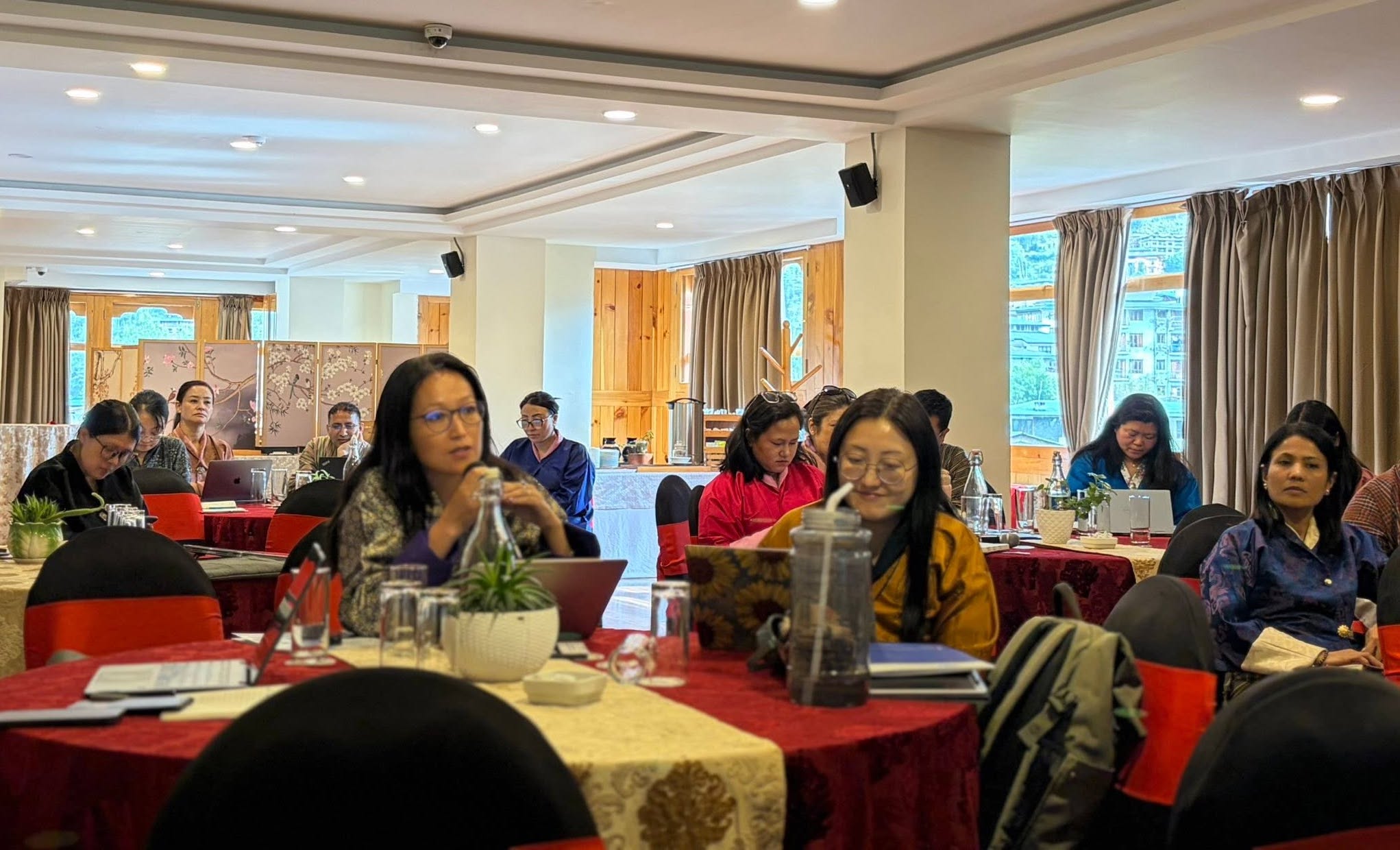
The RTI Forum was organised by the Journalists’ Association of Bhutan (JAB) on the sidelines of its Annual General Meeting on December 30. The decision to hold the forum alongside the AGM was deliberate, as it provided a rare opportunity to bring together a broad cross-section of the media fraternity in one place. The forum was supported by Accountability Lab under the Digital Democracy Initiative for South Asia and aimed to generate recommendations for engagement with Members of Parliament on revisiting the RTI Bill, which lapsed after it was not passed by the National Council.
According to the 2025 Media Landscape Assessment conducted by JAB, nearly 79 percent of Bhutan’s registered journalists report serious difficulty accessing public information. Bureaucratic procedures, cautious institutional cultures, and unclear information-sharing protocols have combined to create an environment where obtaining timely and accurate information is often the exception rather than the norm.
When information delays become democratic delays
Participants noted that these challenges disproportionately affect young journalists. With limited professional networks and inconsistent engagement from media focal persons across government agencies, early-career reporters often encounter silence where responses are expected. As a result, stories are delayed, diluted, or abandoned—not because they lack relevance, but because information remains inaccessible.
The consequences of restricted access extend beyond newsroom frustration. Delayed or incomplete reporting weakens public understanding of policy decisions, development projects, and governance processes. Information gaps create space for speculation and misinformation, eroding public trust in both institutions and the media.
These structural constraints have coincided with a steep decline in Bhutan’s press freedom ranking—from 65th in 2022 to 152nd in 2025. While rankings do not tell the full story, participants noted that the trend reflects broader concerns around transparency, access, and the enabling environment for journalism.
Reviving an old question: Do we need an RTI Act?
These realities framed the central question of the forum: Do we need a Right to Information Act in Bhutan?
Editor-in-Chief of The Bhutanese, Tenzing Lamsang, reflected on the historical origins of the RTI Bill, noting that it was conceptualised even before the adoption of the Constitution, following the vision of His Majesty the Fourth Druk Gyalpo. He recalled the fundamental question that guided its drafting: What is democracy without information?
He emphasised that RTI should not be viewed as a privilege for journalists, but as a right belonging to all citizens. Journalism, he said, is only one channel through which information reaches the public. He also highlighted that access to information at the local level—particularly regarding budgets, development allocations, and audit findings—remains limited, especially in rural areas. Structured disclosure mechanisms under an RTI framework, he argued, could help standardise access and reduce discretion.
Managing Editor of Kuensel, Kinley Tshering, stressed the importance of timeliness in journalism. He shared that formal information requests often involve lengthy procedures and delayed responses, which can render news outdated. Journalists, he said, act as intermediaries between institutions and the public, and predictable information-sharing processes are essential for accuracy and relevance. He added that any RTI framework would need to balance access with responsibility through clear legal structures.
Beyond newsrooms: information access in rural Bhutan
The discussion also highlighted how information inaccessibility affects citizens outside urban centres. Participants noted that in rural areas, basic information about local government (gewog/block)-level budgets, development priorities, and public spending is often difficult to obtain. Even public reports, such as those produced by the Royal Audit Authority, are not always easily accessible.
An RTI framework, participants argued, could shift disclosure from discretion to obligation. Proactive publication through official websites and public platforms could reduce dependence on personal networks and ensure more equitable access to information.
Professional challenges and dissenting views
Senior journalist with Kuensel, Chencho Dema, shared experiences of professional frustration arising from limited information access. She noted that journalists are sometimes perceived as adversarial when seeking information, and the absence of credible data can weaken reporting and public trust.
Phuntsho Namgyal, current affairs programme producer at Bhutan Broadcasting Service, emphasised that constitutional rights must be operationalised through legislation. He urged senior journalists to lead efforts to revive the RTI Bill and encouraged younger reporters to remain engaged with legislative processes.
Freelance journalist and social media influencer Kunga Tenzin Dorji (Supe) described the current information ecosystem as opaque. Referring to Article 7, Section 3 of the Constitution, he characterised the right to information as a “toothless principle” without enabling legislation and argued that RTI could serve as a bottom-up accountability mechanism complementing institutions such as the Anti-Corruption Commission.
A dissenting view was presented by blogger Yeshey Dorji, who cautioned that formal RTI legislation could inadvertently restrict access by introducing rigid procedures and exemptions. He argued that the Constitution already guarantees the right to information and suggested that greater emphasis should be placed on enforcing existing provisions. His concerns about administrative burden and potential misuse were met with counterarguments that safeguards already exist and that well-drafted RTI laws can balance transparency with legitimate restrictions.
An unfinished conversation
The forum concluded without a formal resolution, but with broad agreement that the current status quo is inadequate. Participants acknowledged that access to information is not a peripheral issue, but central to democratic practice. Whether through legislation, institutional reform, or cultural change, the issue demands renewed attention.
As Bhutan reflects on its democratic journey, the question is not simply whether to revive the RTI Bill, but whether the country is prepared to treat information as a public good rather than a guarded resource. The answer, participants suggested, will shape not only the future of journalism, but the quality of public life itself.









Leave a Reply