
Paro, July 30: Twenty-four media marketing executives successfully completed the country’s first training programme dedicated to strengthening the digital marketing and business development capacities of media houses, marking an important step towards building more sustainable and digitally resilient media organisations.
The three-day training on Enhancing Digital Marketing Capabilities of Bhutanese Media Houses, organised by the Journalists’ Association of Bhutan (JAB), concluded in Paro yesterday after intensive sessions on audience development, digital marketing, content promotion, revenue diversification, and the responsible use of artificial intelligence (AI) tools.
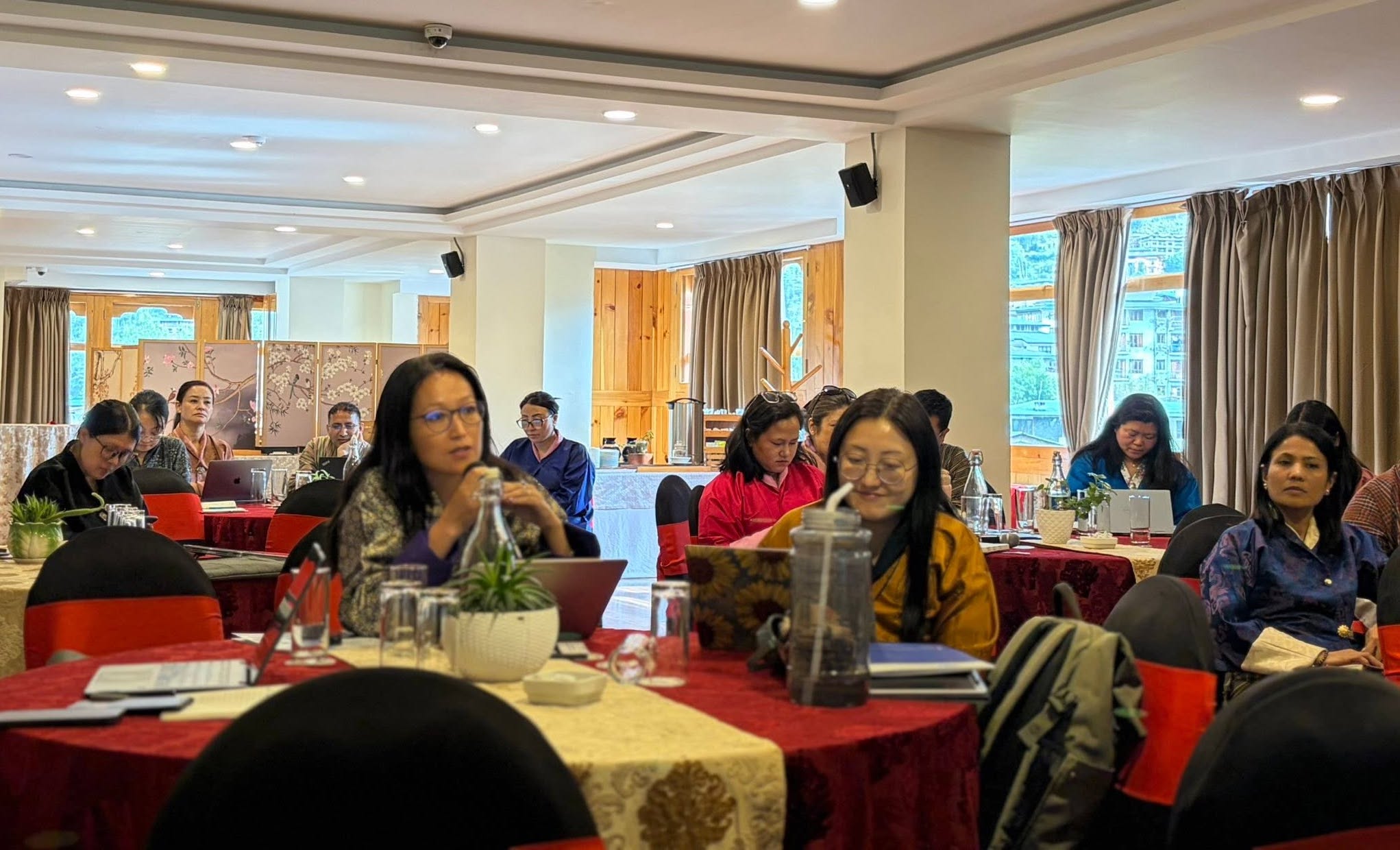
Participants, representing newspapers, television, radio, digital media platforms, and communications organisations, actively engaged in discussions, practical exercises, group work, and presentations throughout the programme. They shared experiences, exchanged ideas, and explored innovative approaches to growing audiences, strengthening client relationships, and developing sustainable business models in an increasingly competitive digital environment.
A notable feature of the training was the strong participation of women, who constituted the overwhelming majority of participants and played a leading role in discussions and group exercises.
The programme equipped participants with practical skills and knowledge in digital marketing principles tailored for media organisations, audience segmentation and engagement strategies, social media marketing, content marketing and storytelling, search engine optimisation (SEO), audience analytics, and digital revenue generation.
Participants also learned how to improve content discoverability through search engines and social media platforms, develop platform-specific audience engagement strategies, and use audience insights and analytics to support editorial and business decisions.
Sessions on digital business sustainability introduced participants to emerging revenue opportunities, including digital advertising, sponsored content, subscription models, membership programmes, events, and other diversified income streams. Participants discussed the growing challenges facing media organisations as traditional advertising revenues decline and audiences increasingly consume news online.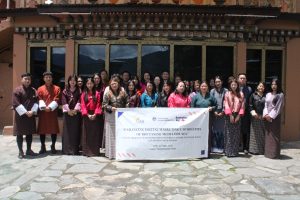
The training also introduced participants to AI-powered tools that can support content promotion, social media planning, audience engagement, and marketing operations. Discussions highlighted the importance of using AI responsibly while maintaining journalistic integrity, transparency, and public trust.
International trainers Ms. Pharujee Inphonlek of Thailand and Ms. Kanika Bhattacharya of India facilitated the programme, drawing on their extensive experience in digital transformation, branding, communications, and business strategy. The sessions combined global best practices with practical exercises tailored to the realities of Bhutan’s media landscape.
Senior media leaders also contributed to the programme. Sonam Wangdi, Editor-in-Chief (of the Bhutan Broadcasting Service, shared insights on the future of media in the digital age, while Ugyen Penjor, Chief Executive Officer of Kuensel Corporation Limited, discussed current digital marketing practices and opportunities for growth in media organisations. Discussions throughout the programme were facilitated by Needrup Zangpo, Chairperson of JAB’s Board of Directors.
One of the key outcomes of the training was the development of draft six-month digital marketing action plans by participating media organisations. These plans outline strategies for audience growth, revenue diversification, digital marketing activities, and AI adoption within their respective organisations.
Participants said the training provided valuable practical knowledge that can be immediately applied in their workplaces and offered a rare opportunity for marketing and business professionals from different media houses to learn from one another and explore collaborative solutions to common challenges.
The organizer said the successful completion of the training demonstrates the growing recognition that the long-term sustainability of media organisations depends not only on strong journalism but also on effective audience engagement, digital innovation, and sound business strategies.
The training is the first activity under JAB’s project, Building Digital Resilience and Capacity in Bhutan: Responsible AI, Youth Engagement and Media Marketing Capabilities, supported by the Department of Foreign Affairs and Trade (DFAT) of the Government of Australia through the Australian Aid programme.
JAB said the knowledge and action plans developed during the training are expected to help participating media organisations strengthen their digital presence, expand audience reach, improve revenue generation, and enhance their resilience in Bhutan’s rapidly evolving media landscape.









Leave a Reply