
Journalists return to the field to tell climate story with depth and human voices
LOBESA, Punakha – Over the last three days, a group of journalists traded breaking news cycles for something slower, heavier, and more demanding: the long view of climate change.
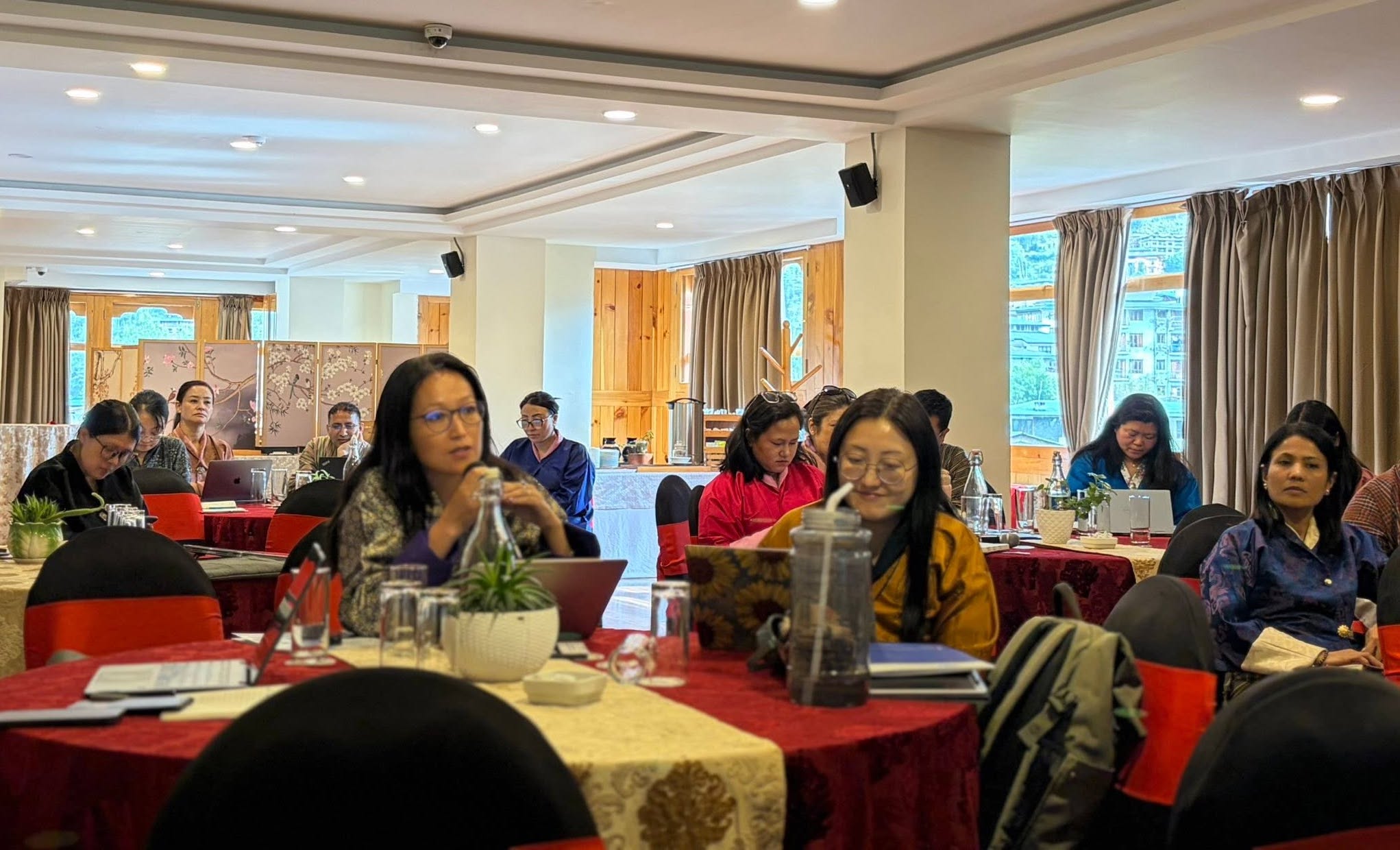
More than 22 journalists from various media houses, including freelance journalists, gathered in Punakha for the second cohort of a national training on Climate Change, Environmental Reporting and Long-form Narrative Journalism, organised by the Journalists’ Association of Bhutan (JAB) from January 12 to 14.
The programme was supported by the Government of Australia’s Regional Media Support Fund through the ABC International Programme.
If the first cohort last September asked whether Bhutanese journalism could move beyond disaster headlines, the second cohort leaned into a harder question: how do we tell climate stories that are scientifically sound, politically accountable, and deeply human—without losing nuance?
From classrooms to riverbanks
The training blended classroom learning with expert interactions and field exposure, culminating in a site visit to the Punatsangchhu-I Hydroelectric Project (PHPA-I). Standing by the river and the concrete spine of a mega hydropower project, participants confronted the tensions that define Bhutan’s development story—clean energy ambitions alongside environmental and social costs that are often underreported.
The programme concluded with a story-pitch mapping session, preparing participants for a forthcoming reporting grant. JAB will soon announce a call for story proposals, continuing its approach of pairing training with editorial support.
Building on the first cohort
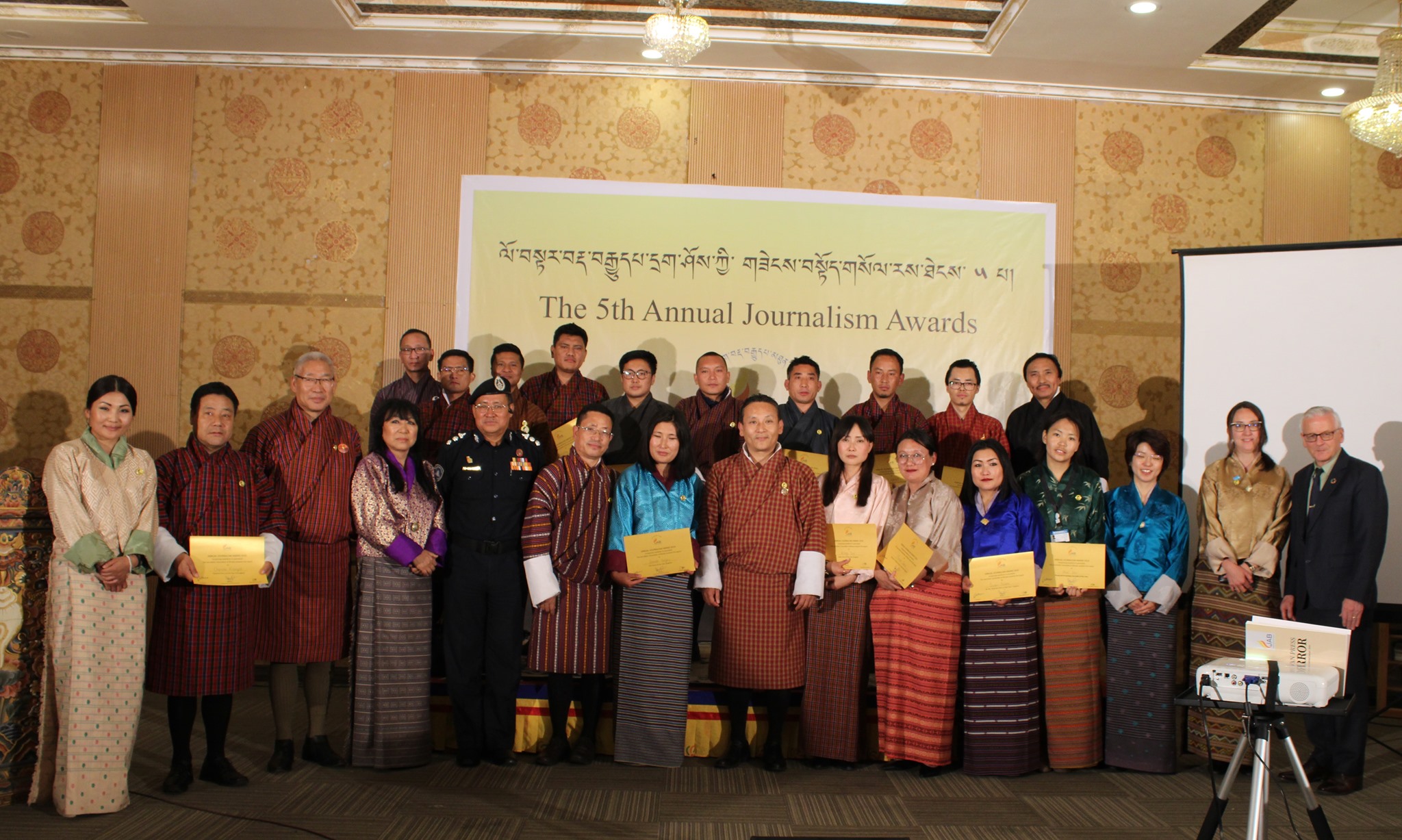
Opening the programme, a JAB official said the second cohort builds on lessons from the first training held in September last year, which was followed by a reporting grant awarded to nine journalists and one digital storyteller.
“The stories that came out of that process showed what becomes possible when journalists are given time, tools and trust,” the official said. “Climate reporting does not have to be episodic or reactive. It can examine accountability, lived experience and long-term consequences.”
A second reporting grant will follow shortly after this training, reaffirming JAB’s belief that learning is most meaningful when tested through real reporting.
Climate change, up close
Bhutan’s international image as a carbon-negative country remains a powerful narrative. But during the training, speakers repeatedly returned to the gaps between global recognition and local reality.
“In a country defined by fragile mountain ecosystems and deep connections between people and nature, climate change is not an abstract global issue,” a JAB official said. “It is local, immediate and deeply human.”
Resource persons from the National Center for Hydrology and Meteorology (NCHM), the Department of Environment and Climate Change (DECC), and the Department of Forests and Park Services (DoFPS) grounded discussions in science, policy and field realities.
An official from DECC traced the evolution of global environmental governance—from the Industrial Revolution to the Stockholm Conference, the Rio Earth Summit, and the birth of the UN Framework Convention on Climate Change and the Convention on Biological Diversity.
The session also examined Bhutan’s own environmental legislation, including the National Environment Protection Act 2007 and the National Environment Strategy 2020, alongside the country’s commitment to carbon neutrality under the Paris Agreement.
While Bhutan remains carbon negative due to its forest cover, the official cautioned that maintaining this status amid economic growth will require difficult policy choices, climate finance, and public scrutiny.
The NCHM official presented observed and projected climate trends in Bhutan: rising temperatures, shifting rainfall patterns, glacial lake outburst flood risks, and the growing importance of early warning systems. Journalists were urged to understand climate data, uncertainty and probability—not just impacts—if they are to report responsibly.
On the second day, officials from the Bhutan Trust Fund for Environmental Conservation discussed climate finance, while DoFPS walked participants through Bhutan’s protected area system. With five national parks, four wildlife sanctuaries, one strict nature reserve and nine biological corridors, conservation in Bhutan is as much about connectivity as protection.
Learning to tell better stories
Two moderators guided sessions on long-form narrative techniques, human-interest storytelling and the anatomy of a strong reporting pitch. The focus was not on polish, but on purpose: whose voices are missing, what questions remain unasked, and where journalism has been too comfortable.
JAB’s Executive Director, Rinzin Wangchuk, said the training was intentionally designed to be interactive rather than lecture-driven.
“These questions are not meant to criticise journalists,” he said. “They are meant to help us grow—as individuals and as a community of practice.”
Participants were encouraged to challenge assumptions, experiment with form, and engage resource persons as partners in public accountability rather than as information gatekeepers.
Shifts in perspective
By the final day, many participants described the training as an eye-opener.
“This training is relevant because it allowed me to meet officials in person and establish contacts,” Yeshi Dolma of Bhutan Today said. “That matters for any reporter.”
Freelance journalist Dechen Wangdi said the workshop helped sharpen both thinking and storytelling. “I can already think of many climate-related story ideas, and I’m really looking forward to working on them.”
For Bhutan Times’ editor-at-large, Rinchen Dorji, the field visit offered a shift in perspective. “Seeing the ground realities of a mega hydropower project—how it affects the environment and river ecology—changed how I think about reporting these projects.”
As the journalists dispersed from Lobesa, notebooks heavier with ideas than quotes, the hope for the organiser was clear: that the next wave of climate stories will be slower, braver, and more rooted in the lives and landscapes they seek to understand.








Leave a Reply