
THIMPHU – Reporter Kinzang Lhaden still remembers the uneasiness she felt whenever she was assigned to cover legal stories for the Bhutan Broad- casting Service (BBS).
“I often struggled to distinguish between legal facts and opinions,” she said, recalling how difficult it was to avoid misrepresenting sensitive cases or influencing public perception.
Her reports often relied heavily on judgments because she was unsure how to include the voices of those involved. Verifying even small details required repeated consultations with lawyers or experts. Simplifying complex legal issues for ordinary citizens felt daunting. “Reporting on ongoing cases was particularly tricky as information was still unfolding,” she added.
That hesitation has now eased. After attending a two-day training on foundations and advanced legal reporting, Kinzang Lhaden says she feels better prepared.
“The workshop enhanced my skills in analysing complex cases, interpreting legal documents, and moving beyond surface-level verdicts,” she explained. “I have realised that accurate, fact-based reporting is not just good journalism, it is also the best protection against defamation suits.”
Shift in perspective
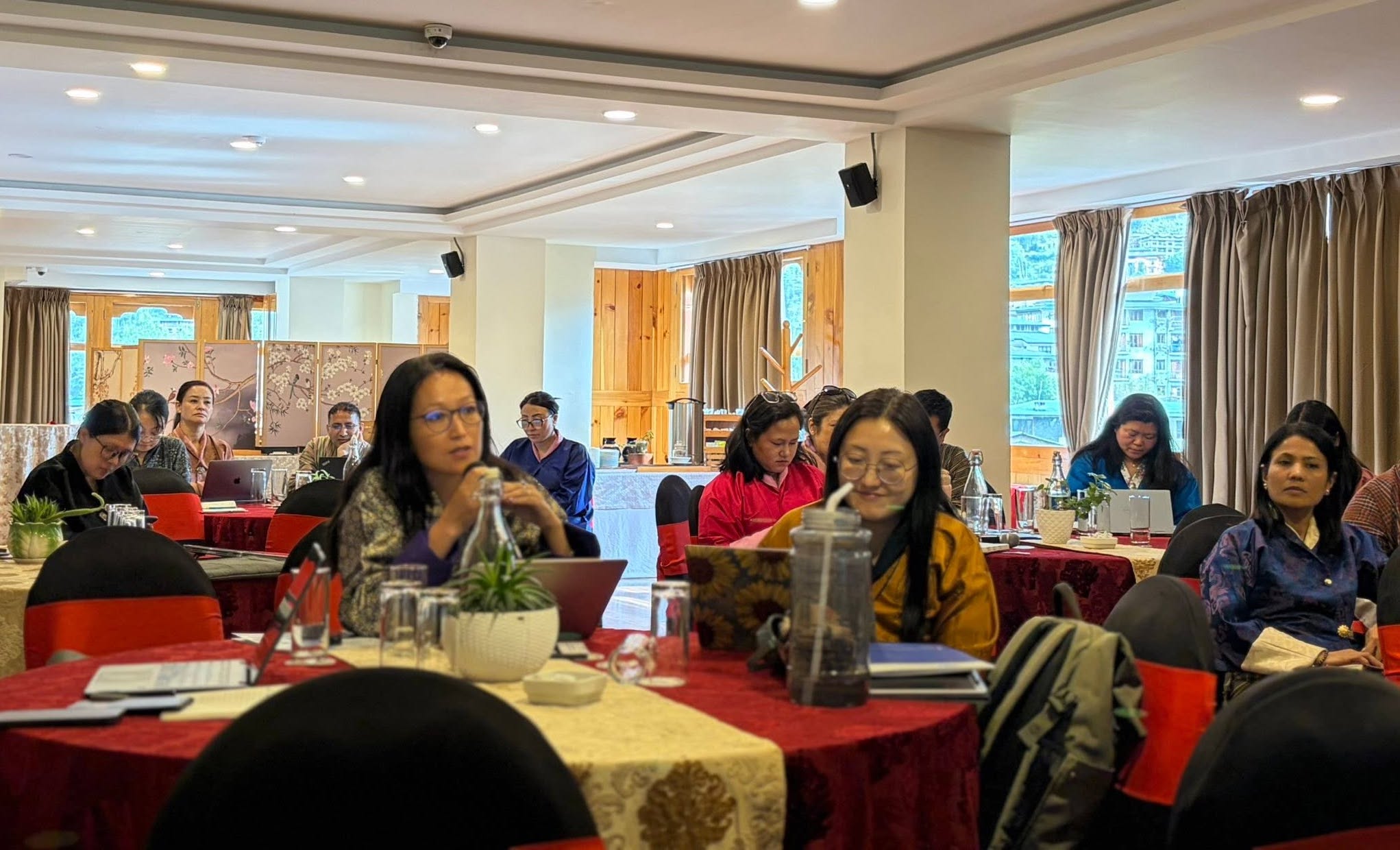
The training, held on September 15 and 16 in Paro, brought together 25 journalists from both print and
broadcast media. It was designed to meet one of the newsroom’s most pressing needs—strengthening legal literacy among young and mid-level reporters.
For Kinzang Lhaden, one of the biggest lessons was learning how to legally challenge restrictive protocols imposed by government agencies. “Challenging doesn’t always mean going to court,” she reflected. “It can also mean producing well-researched, impactful stories that hold institutions accountable.”
Other voices
Tshering Dema, a reporter with The Bhutanese, described the sessions as “an eye-opener.” The discussions on defamation laws, she said, were particularly useful. “It helped me understand the fine line between mindful reporting and the risks of defamation. Even the simplest news report can have serious implications if not handled carefully.”
For Phuntsho Namgyal, a current affairs producer at BBS, the most valuable lesson was learning to interpret court documents. “This workshop will boost my confidence in verifying facts, avoiding legal pitfalls, and ensuring fairness and accuracy,” he said.
Guidance from experts
Four resource persons led the sessions, covering everything from access to information and court reporting rules to analysing judgments and structuring stories.
Sonam Tshering, Associate Professor at Jigme Singye Wangchuck School of Law, reminded participants that legal reporting requires follow-ups. “Many times journalists cover a case but never return to track its outcome. A court story does not end with a single report,” he said.
Former Kuensel editor and researcher Samten Wanchuk stressed that legal journalism is not about repeating jargon but simplifying issues for the public. “Accuracy and clarity are the cornerstones of trust,” he said.
Lawyer and former parliamentarian Ugyen Wangdi urged reporters to familiarise themselves with legal codes and terminologies. “If you understand the Penal Code, the Civil and Criminal Procedure Code, the Evidence Act, and the Constitution, you will have little difficulty interpreting judgments.”
Attorney Sonam Yangdon, a Bar Council member, issued a caution: “Even a minor factual mistake could open the door to defamation lawsuits. Careful, meticulous journalism isn’t just good practice— it’s legal protection.”
Resounding success
Supported by the Switzerland-Bhutan Society, the training was widely described as a success. Participants agreed it filled a long-standing gap in professional development.
“We should have such training at least once a year, with more engagement from judges and lawyers,” one participant suggested.
By the end of the two days, 25 journalists left with renewed confidence—not only in reporting legal matters accurately and responsibly but also in helping build public trust in Bhutan’s justice system.
For reporters like Kinzang Lhaden, who once relied only on verdicts, the training has opened new possibilities.
“Now I can go beyond judgments to tell fuller stories,” she said. “That makes me feel like a stronger journalist and a more responsible one.”









Leave a Reply